Birth of the Republic
1568–1648"Better to lose land than freedom" — these words became the motto of the provinces that rose up against the Spanish crown.
In the 16th century, the territories of the modern Netherlands were part of the Habsburg Empire. Discontent with high taxes, religious persecution of Protestants, and centralisation of power under Philip II led to an explosion. In 1568, the Eighty Years' War began under the leadership of William I of Orange, known as William the Silent.
A key moment was the Siege of Leiden in 1574: the townspeople withstood a months-long siege, and after the dykes were breached, water brought liberation. In 1581, the States General signed the Act of Abjuration, formally deposing the Spanish monarch. Thus the Republic of the Seven United Provinces was born — a unique federation without a king for its time.
📜 The Act of 1581 — the first document in European history to proclaim the right of the people to depose a monarch.
Plakkaat van VerlatingheThe Golden Age of Seafarers
1602–1702The 17th century turned a tiny republic into a global trading empire and a centre of the arts.
Thanks to the Dutch East India Company (VOC), founded in 1602, the Netherlands established control over spices, textiles, and sea routes. Amsterdam became the financial capital of Europe: the world's first stock exchange and the Bank of Amsterdam were opened here. The republic's fleet numbered more ships than the fleets of England and France combined.
At the same time, Rembrandt, Vermeer, and Frans Hals were creating their masterpieces. Painting reflected not only the wealth of the burghers but also the modesty of the Calvinist ethic. Still lifes, seascapes, and scenes of everyday life became the hallmark of the era. However, rivalry with England and wars with France gradually depleted resources, and by the end of the century, the Netherlands had ceded leadership to Britain.
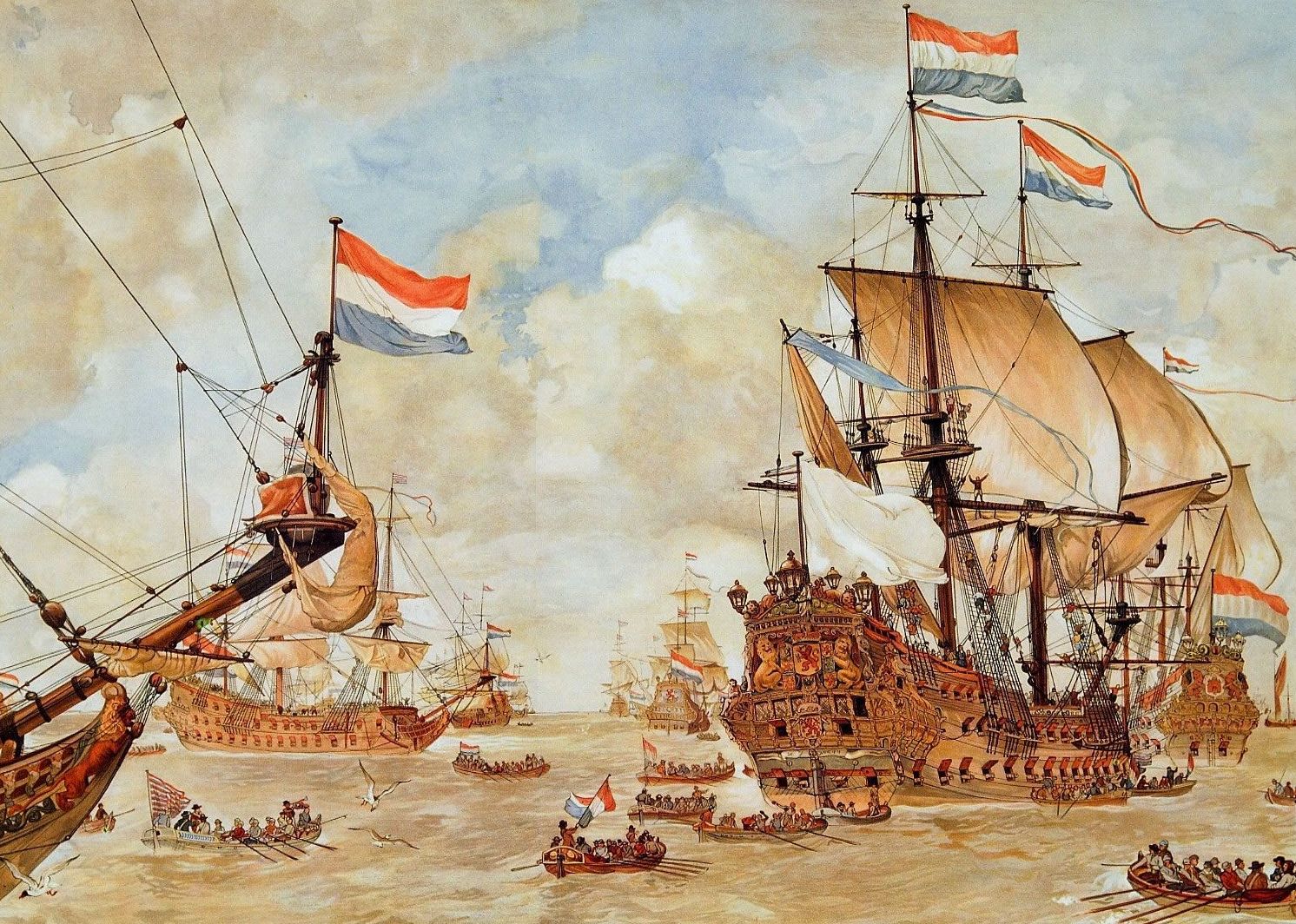
🌏 VOC became the first company in history whose shares were freely traded on the stock exchange.
Vereenigde Oostindische CompagnieModern Netherlands
1815–PresentFrom a kingdom to a progressive constitutional monarchy — the Netherlands continues to shape the modern world.
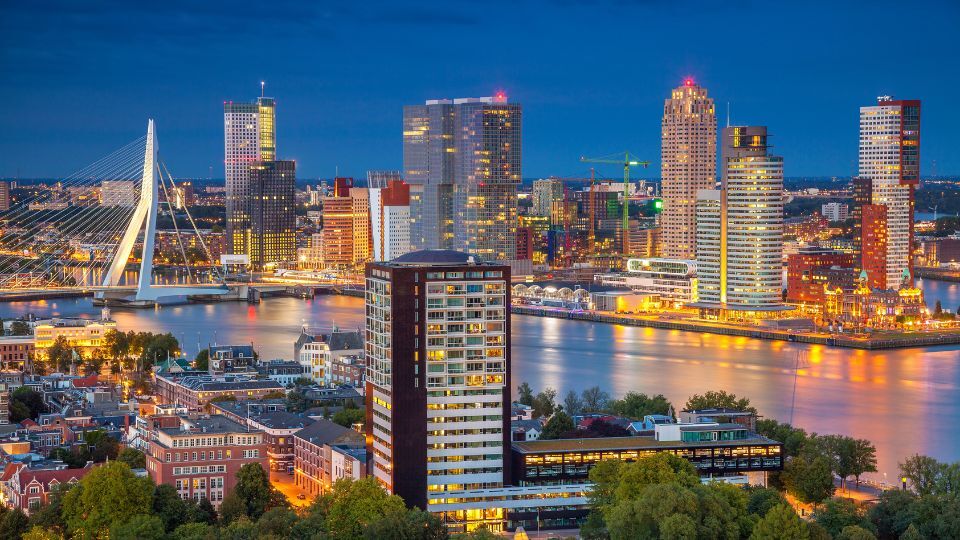
After the Napoleonic era, the Kingdom of the Netherlands was established in 1815. The country rapidly industrialised in the 19th century, with Rotterdam becoming one of the world's largest ports. During World War II, the Netherlands suffered under Nazi occupation, with the devastating Rotterdam Blitz and the heroic resistance remembered to this day. The post-war period saw the country become a founding member of the EU and NATO.
Today, the Netherlands is known for its innovative water management, having built the world's most advanced flood protection system — the Delta Works, listed as one of the Seven Wonders of the Modern World. The country is a global leader in agriculture, technology, and sustainable urban planning.
🚲 Cycling Nation
With over 35,000 km of cycling paths, bikes outnumber people in the Netherlands. Amsterdam alone has more than 880,000 bicycles.
🌷 Flower Power
The Netherlands produces 77% of the world's flower bulbs and is the largest exporter of flowers globally, with the famous Keukenhof garden attracting millions.
💧 Water Masters
About 26% of the country lies below sea level. The Dutch have not just survived — they've thrived, creating the world's most sophisticated water management.
🏛️ The International Court of Justice — the principal judicial organ of the UN, has been seated in the Peace Palace in The Hague since 1946.
Vredespaleis